


In July 1976, Apple I was launched with significant anticipation. A total of 200 units were produced each selling for $500. Contrary to what many might expect, this initial product was actually a kit, comprising a fully assembled board with 62 chips. However, this didn’t constitute a fully operational computer; it was merely one part of a larger whole. After purchasing the Apple I, buyers still needed to add a case, a power supply transformer, a switch, a composite video display, and, of course, a keyboard. Steve Jobs even offered an optional card as a clever marketing strategy, providing an interface for storage cassettes at an additional cost of $75.
You might think it’s implausible to buy something as incomplete and non-functional as the Apple I. Yet, if we pause to consider, this method of selling products is quite common today, and ironically, we often find ourselves purchasing them.
Over the past two years, rumors in Silicon Valley hinted at the emergence of a technology poised to set a new benchmark in tech cycles. This technology involves virtual assistants designed to break through traditional barriers and adapt to the real world.
The idea of acquiring these tech products, with all their functionalities poised to benefit us, is appealing, but what happens when we realize that we’ve only acquired pieces of the puzzle? Yes, it works, but does it truly meet the expectations that were set?
The idea of AI assistants or devices helping us in our everyday tasks is compelling to anyone. Add the words "revolutionary" or "trendy," and it’s nearly impossible not to be tempted to give them a try.
Humane AI Pin: Hardly the new iPhone
Meet the new ultra-futuristic portable computer. In an era brimming with unique products like Vision Pro and wearable glasses, the Humane AI Pin has now emerged. Founded by Imram Chaudri and Bethany Bongiorno, both former Apple employees, who were integral to the teams that developed the iPhone, iPad, and EarPods under Steve Jobs and Apple’s innovation team. They possessed the expertise and confidence necessary for launching this ambitious project intended to surpass the iPhone. The goal of Humane AI Pin is to foster more human-centered technology, which may explain its name, and to mitigate the adverse impacts of screen time. It aims to keep us engaged with the real world rather than tethered to a single smartphone screen.

During one of Chaudri's initial demos, the device demonstrated its ability to see, hear, and tag objects. Thanks to its AI development and multimodal capabilities, it can offer recommendations on food, handle calls, or schedule meetings. Moreover, it features a remote control system that allows you to adjust a room's temperature just by looking at your palm. It can also suggest ways to repair a machine based on available tools. Essentially, the device is designed to interact with the external world in a natural way.
Unlike a traditional iPhone, the Humane AI Pin offers greater autonomy. While initially impressive, as you delve deeper, you may begin to question the hype surrounding this new device, which costs $700 plus a $24 monthly subscription fee for data, services, and cloud storage.
One standout feature is that it can remember various tasks we assign to it. All these requests are then displayed in the Humane Center, which serves as the online hub for everything related to the pin. There, you can also see a complete history of text messages sent, what has been heard, and everything we've asked it to remember. It's quite comprehensive.
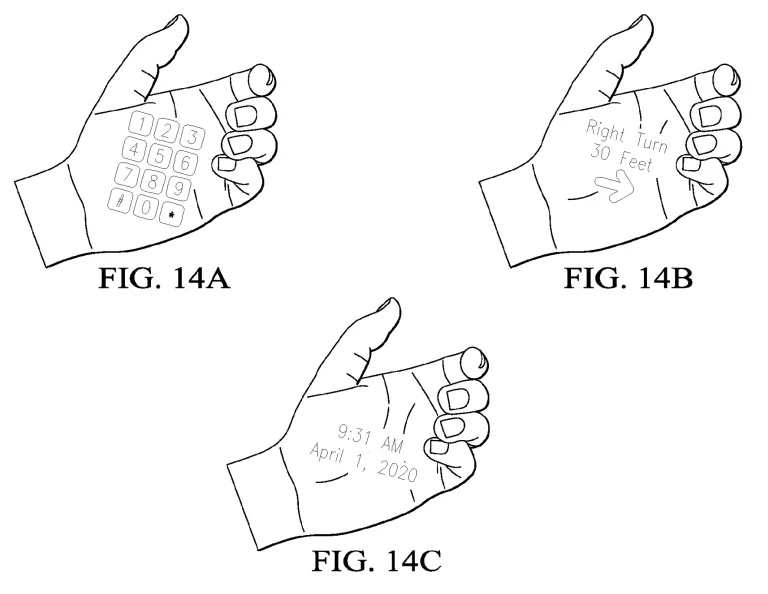
Another notable functionality is the ability to turn the palm of your hand into a display using the pin's integrated laser projector. You'll eventually get used to positioning your hand correctly, and then the user interface will project onto a mini 720p green screen. The selection of options is intuitive and straightforward. Essentially, you navigate by rotating your hand, opening and closing your fist, or literally pushing forward to scroll further through a menu. This amounts to a 3D user interface that you need to learn.
I won't dwell on how well-designed the visual component of the Humane AI Pin is (which is undoubtedly its best attribute). I wouldn't expect anything less from two individuals who played significant roles in revolutionary projects at Apple.
So, what's the big issue with the Humane AI Pin?
Unfortunately, this device performs poorly in many of the tasks it undertakes. Given how it was designed and the high expectations set in the market, this is particularly disappointing.
In terms of response speed, it is inherently slow in most cases. It processes our queries via a cloud service and then returns the response, which prolongs the waiting time. Additionally, if we consider the accuracy of its responses, they are often incorrect or inaccurate. When you consider wait times or a poor internet connection, response times can extend even further. Consequently, this disrupts smooth conversation and leads to awkward pauses between responses.
On the other hand, when it comes to battery life, it's inconsistent, particularly given that one of the touted features of the Humane AI Pin was its supposed longevity compared to a conventional phone. Adding an additional device to our lives means we need time to learn how to use it, and we expect, among other things, to be able to use it for as long as possible without much hassle. Having to constantly check the device's battery life detracts from the user experience. Some might argue it's just a matter of changing the battery, which I understand and respect, but ideally, this should only happen once a day. In reality, this device needs to be charged multiple times throughout the day. Additionally, it continuously generates heat, sometimes even when not in use, suggesting that wireless charging is notably inefficient and loses energy through heat dissipation.
Another point of concern is their comfort. They can be somewhat uncomfortable to carry. Even though they're made from lightweight materials like aluminum, they aren't as light as one might expect.
Finally, the projector feature is initially striking and impressive, catching the eye immediately. However, after several uses, it appears less legible, especially because it lacks sufficient brightness for outdoor environments or as a projection, which is crucial since it reflects off the palm of your hand. Also, the brightness diminishes with distance.
All this limits the value of the device. Not to mention features the device lacks like the ability to install apps.
Rabbit R1: Another incomplete AI product
Like the Humane AI Pin, this is another AI device. However, this device is meant to be carried in a pocket, similar to a smartphone. The Rabbit R1, designed by the Teenage Engineering team, is roughly the size of a stack of post-it notes.
A notable feature of this new device is its AI-driven capability to respond to queries faster than the Humane AI. Another key difference is that its setup via a screen makes it quick and easy to access all the benefits this product offers, similar to a smartphone interface.
This multimodal assistant can directly respond to questions about its environment or what it observes through its built-in camera, a functionality already present in other technologies. It performs well in areas where other devices excel, even compared to the Humane AI Pin. But does it perform as well in areas where other AI assistants are lacking or tend to have a high error rate?
As for battery life, it's as disappointing as that of the Humane AI Pin, typically running out after about four hours. This means you'll need to charge it several times throughout the day. It takes about 45 minutes to fully recharge though.
Moreover, it lacks basic functionalities. For example, it cannot set alarms, timers, or record videos or photos, nor can it send emails. These are all tasks I would expect from an AI assistant, yet incredibly, it cannot perform any of them.
The issues previously mentioned might be tolerable or become manageable over time. However, like the Humane AI Pin, the quality of the responses from Rabbit R1 falls short of expectations. It frequently makes mistakes and hallucinates.
Unlike the Humane AI Pin, Rabbit R1 is more affordably priced at $200 and does not require a monthly subscription. Despite this, the device seems to have lower-quality finishes in its design.
So, what should one expect from Rabbit R1 as a product?
This device is equipped with technology such as the Large Action Model (LAM), so one could expect it to understand our natural language, process it, and generate precise responses. That’s how we interact with this AI. The effectiveness of such models depends on them being trained with vast amounts of data. This is where the limitations of Rabbit R1 become apparent, as it was not trained with adequate data, leading to limited accuracy and reliability, making it just another AI assistant.
Rabbit AI currently only supports four applications: Spotify, Uber, DoorDash, and Midjourney. While you can interact with these apps, you'll encounter several issues, such as incorrect song playback or erroneous Uber orders.
The company has plans to expand to 800 applications and develop a user interface that adapts to our preferences and usability. However, this development is still underway, and we will have to wait patiently and settle for a product that is incomplete and largely ineffective, even for its intended purpose.
A complete disappointment.
Victims of Future Ambition
I feel we need to recognize that these companies developing AI devices are getting it wrong in some functional aspects. What I mean is, they are delivering unfinished products. This means we are purchasing half-baked technology, which will later be supplemented with updates. However, this is where we find ourselves and our patience tested, as the timeline for these adjustments often proves to be frustrating.
This reminds me of when Tesla began selling cars equipped with an entire autopilot system. It had good autonomy and a charging network but was not yet 100% ready to use all its potential. It took time to gather data, which was then used to continue training on how the real world functions. This helped their system to learn and gain the edge they were seeking, allowing them to create one of the best autopilot software.
Of course, this is the path that AI assistants like Humane AI Pin or Rabbit are trying to follow. But it's difficult to ask for patience when we may be at one of the peaks of AI. People who buy these products do so for what they can do today, not tomorrow.