


Hi!
I wrote today’s post in collaboration with Sam Illingworth. Sam writes Slow AI, which began in July 2025 as an experiment in attention: “I wanted to know what would happen if I stopped chasing new tools and started paying attention to how I asked questions, how I listened to the replies, and how I ended each exchange. The pattern that emerged was simple. The most meaningful conversations all followed the same rhythm. A careful beginning, a middle that invites just enough friction, and an ending that turns the dialogue into understanding.”
The past two weeks have been flooded with AI releases.
GPT-5.1, Grok 4.1, Gemini 3, and Claude Opus 4.5 all launched in just 12 days!
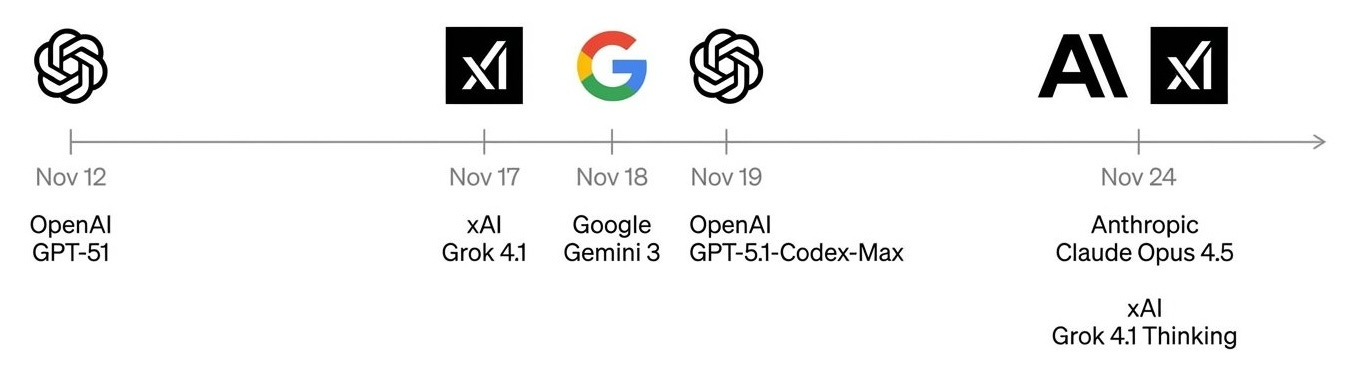
As an AI writer (and enthusiast), I’ve covered some of this news to keep you updated on the latest in AI and highlight what I believe is worth knowing.
But here’s the thing: you don’t need to chase every new tool or update
What matters more than learning the latest release is developing skills that will help you regardless of which tool you use
One of those skills worth learning is using AI as a thinking partner.
Today’s article is split into two sections. First, Sam Illingworth will share prompts you can use at the beginning, middle, and end of your everyday chats to get clearer, more thoughtful results. Then, I’ll zoom in on how professionals, leaders, and executives can use AI as a thinking partner to strengthen decision-making.
Part 1: How to make your everyday chats more meaningful
Use the prompts below during your chats to enhance them. You don’t need to use all the prompts every time. What matters is the rhythm: a deliberate start, a middle that tolerates friction, and an ending that reflects on what changed
How to begin a meaningful chat
The beginning shapes the quality of everything that follows. Most rushed questions are really half questions. They hide assumptions, distracting details, and unexamined doubt. A slower start reveals the real issue and steadies your attention. It clears the noise so that curiosity can take hold
Use this at the start of your chats:
Before I write anything, help me notice the question beneath the question I am about to type. Show me the assumptions inside my first instinctive question and ask which ones I am genuinely unsure about. Help me uncover the central issue and point out the distractions I can release. Ask me a few deeper questions that make me look again before I commit to a direction.
This prompt works because:
It slows the reflex to ask too quickly
It surfaces untested assumptions
It clears the mental clutter you bring into a chat
It widens the space of possible questions and sets the stage for depth over speed
How to work through the middle
The middle is where most conversations drift into passive acceptance. Fluent answers can create the illusion of progress, but fluency is not depth. A meaningful middle introduces constructive tension. It strengthens ideas, exposes blind spots, and keeps your own reasoning active.
Use this as a mid-conversation check-in, repeating it whenever you feel the exchange settling into autopilot:
Offer a thoughtful counterpoint to what I have said so far and help me reconsider one element with fresh eyes. Show me where my reasoning might be thin or where I may be avoiding tension. Ask one clarifying question that would deepen the work rather than accelerate it.
This prompt works because:
It creates deliberate friction
It forces your argument to meet resistance
It brings weak points into view
It keeps the chat focused on thinking rather than production
How to end a chat well
The end is the part most people skip. They stop at the answer rather than the learning. A slower ending turns the conversation into something you can carry with you. It helps you identify what changed, what mattered, and what you want to do next. It also restores your own voice after a long exchange.
Use this before you finish:
Tell me what seemed to matter most in our exchange and what appears to have shifted in my thinking. Respond in the calmest possible voice and help me match that tempo. Before offering any final guidance, ask me what I already know and what I might want to think through myself
This prompt works because:
It consolidates insight
It highlights the turning points in the dialogue
It slows your internal pace before you move on
It prevents overreliance by returning you to your own judgement
Don’t forget to subscribe to Slow AI where you can find prompts to reflect, create, and reclaim control in an accelerated digital world
Part 2: How professionals can use AI as a thinking partner
First, let’s clarify what using AI as a thinking partner means:
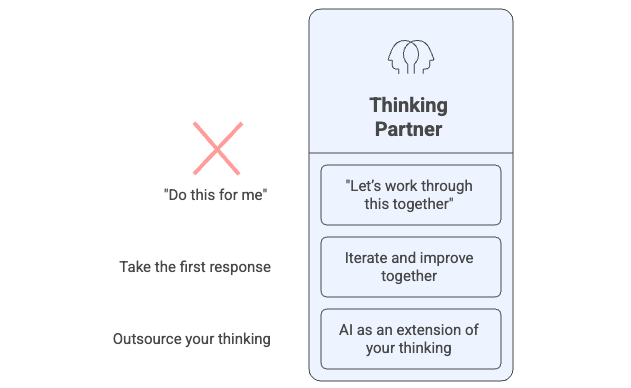
It’s important to remember this thinking partner mindset. Later, I’ll show you prompts that you can use as a starting point. That said, I highly recommend you craft your own by acquiring this mindset and learning this prompt formula.
This section focuses on using AI not to do your work for you, but to:
Discover solutions to your work challenges
Structure your thinking, build strategic plans, and identify blind spots
Simulate pitches with decision-makers or board reviews
Strengthen your decision-making.
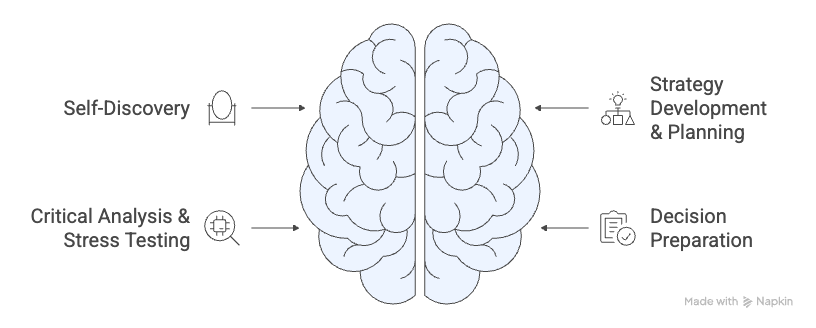
Keep reading if you’re a professional, leader, or executive who wants to use AI as a thinking partner (best copy-and-paste prompts included)
Only accessible to paid members :)
P.S. I created a Google Doc with more guides like this (check it out here)
